

Specialized Monogram Appliance Repair in San Francisco
Mon–Sat: 8:00 AM – 7:00 PM
Lettuce turning to glass, milk with ice crystals, eggs cracked in the door? Here is what an overcooling fresh food compartment points to and what to check first.
Finding a frozen carton of milk or limp, glassy lettuce on the middle shelf is unsettling in a kitchen where the refrigerator is built into the cabinetry and looks perfectly normal from the outside. The fresh food section is meant to stay cold without freezing, and when it does not, something is sending too much cold air into it or telling the cooling system that the compartment is warmer than it really is.
A built-in refrigerator keeps two zones apart by moving cold air through ducts and controlling how much reaches each side. The freezer side makes the cold. The fresh food side receives only a measured share, and a sensor decides when to ask for more. When food freezes, one of three things has usually gone wrong: too much cold air is arriving, the sensor is reporting a false reading, or the air is arriving in the wrong place because something is blocking its path.
The pattern of what froze is a clue. Items against the back wall or under an air outlet freeze first. If everything freezes, including the door bins, the controls or sensing are more likely at fault than the shelf layout.
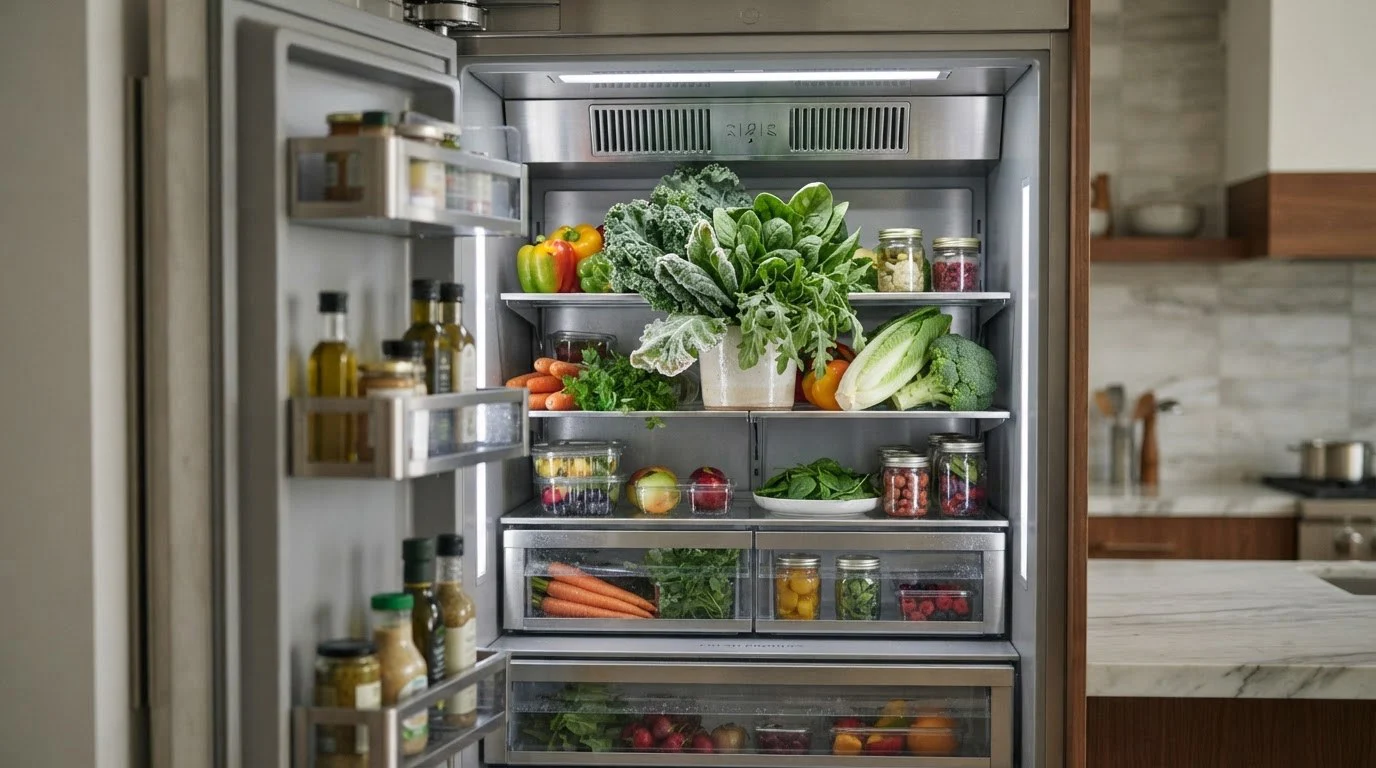
Start with the simplest cause. Tall bottles, cartons, and produce drawers pushed hard against the rear wall can sit right in front of an air outlet. Cold air that cannot spread out concentrates on whatever is in front of it and freezes it. Pull everything about a hand’s width away from the back, and keep the grille area clear so air can circulate.
A very full refrigerator adds to it. Crowded shelves block circulation, the sensor sees warm pockets, and items nearest the vents get too cold.
Read the control display and write down the setting for both sections. Someone may have lowered the fresh food setting while trying to cool a party batch of drinks, or a power interruption may have returned the controls to a different value. Set it back to the setting you normally use and give the refrigerator a full day before judging the result, because the cabinet reacts slowly.
Avoid large swings in the setting. A technician wants to see the real behavior at your normal setting.
Warm room air leaking in does not freeze food, but a door that rests slightly open can trick the system into long cooling runs. A custom panel adds weight to the door, and a panel that is not supported properly can make the door hang or fail to close fully. Open the door and let it swing shut on its own. It should close softly and stay shut. Look along the gasket for folds, gaps, or a section that has pulled away from the frame. Wipe the gasket with warm water and a soft cloth, because food residue can keep one corner from seating.
After the outside checks, these are the usual suspects, all checked by a technician and not by an owner:
Each produces the same visible result, so the diagnosis separates a sensing fault from an airflow fault before anything is replaced.
Do not remove the interior back panel or air duct covers. The panels hide fan wiring and the area around the sealed cooling system. Do not use a hair dryer or sharp tool on frost.
A built-in refrigerator sits in a tight cabinet opening, so airflow around the cabinet matters as well as airflow inside it. Condos and older buildings often have kitchens where the opening is snug and the surrounding cabinetry holds heat from nearby appliances. Clear space and ventilation at the top and base of the unit are part of what is checked. Panel-ready units also depend on a panel and handle that are installed square, because a panel that drags on the cabinet frame or floor can keep the door from sealing evenly.
Book a visit when food freezes repeatedly after you have cleared the vents and confirmed the door closes, when the settings will not hold, or when frost builds up where it did not before. Stop relying on the refrigerator for delicate food in the meantime. Our Monogram refrigerator repair service starts with a diagnosis before any repair, a written estimate, and nothing repaired until you approve it. You can also read about the lineup on the Monogram built-in refrigerators guide.
The label with the model number, usually on the inside wall or near the door frame, helps a great deal, and our guide to finding your Monogram model number before service shows where to look. A 36-inch unit such as the ZIP364NBVII or the ZIC363IPVLH has the same basic two-zone airflow design described here, though the exact parts depend on the model. If the freezer side is also showing frost around the seal, the cause may overlap with the one in our post on frost around a Monogram freezer door.
It depends on the food and how long it stayed above a safe holding condition, which you cannot judge by touch alone. Items that froze solid and stayed frozen are usually fine, but produce and some dairy lose texture. When in doubt about anything perishable, discard it.
The top shelf is often nearest an air outlet or duct. Uneven delivery from a sticking damper or a partial duct blockage tends to affect the shelf closest to the incoming air first.
A panel itself does not chill food, but a heavy or poorly aligned panel can keep the door from closing and sealing fully. That changes how long the system runs. A technician checks panel weight, hinges, and gasket contact as part of the visit.
It may reduce freezing temporarily, but it hides the cause. If a sensor or damper is faulty, the refrigerator will drift again. Write down the setting and the result so the technician can compare it with what they find.
It is very helpful because airflow parts and sensors differ between built-in refrigerator designs. If you cannot reach the label, tell us the width and whether the door is panel-ready or stainless steel, and we can narrow it down.
Share a few details and we’ll confirm an appointment. Prefer to talk? Call us and we’ll help right away.