

Specialized Monogram Appliance Repair in San Francisco
Mon–Sat: 8:00 AM – 7:00 PM
Cans and bottles that never get properly chilled in your Monogram beverage center point to airflow, door seal, or cooling faults. See what to try before booking a visit.
Beverage centers sit in bars, butler pantries, family rooms, and outdoor-adjacent kitchens. They take more door openings than a main refrigerator, they are loaded with room-temperature cans after a shopping trip, and they are often closer to heat than owners realize. When drinks that used to be cold are only cool, the cause is often simple. Sometimes it is not.
Ask three questions. First, how recently was the cabinet loaded with warm drinks? A full restock takes a long time to chill, and the first few hours after loading are not a fair test. Second, has the door been opened a lot, such as during a party? Third, did anything change nearby, like a new appliance, a closed-off cabinet, or a sunny afternoon on the front of the unit?
If the answers point to a normal explanation, give it a day with the door closed before deciding anything is broken. If the cabinet is empty and still not cold, the problem lies elsewhere.
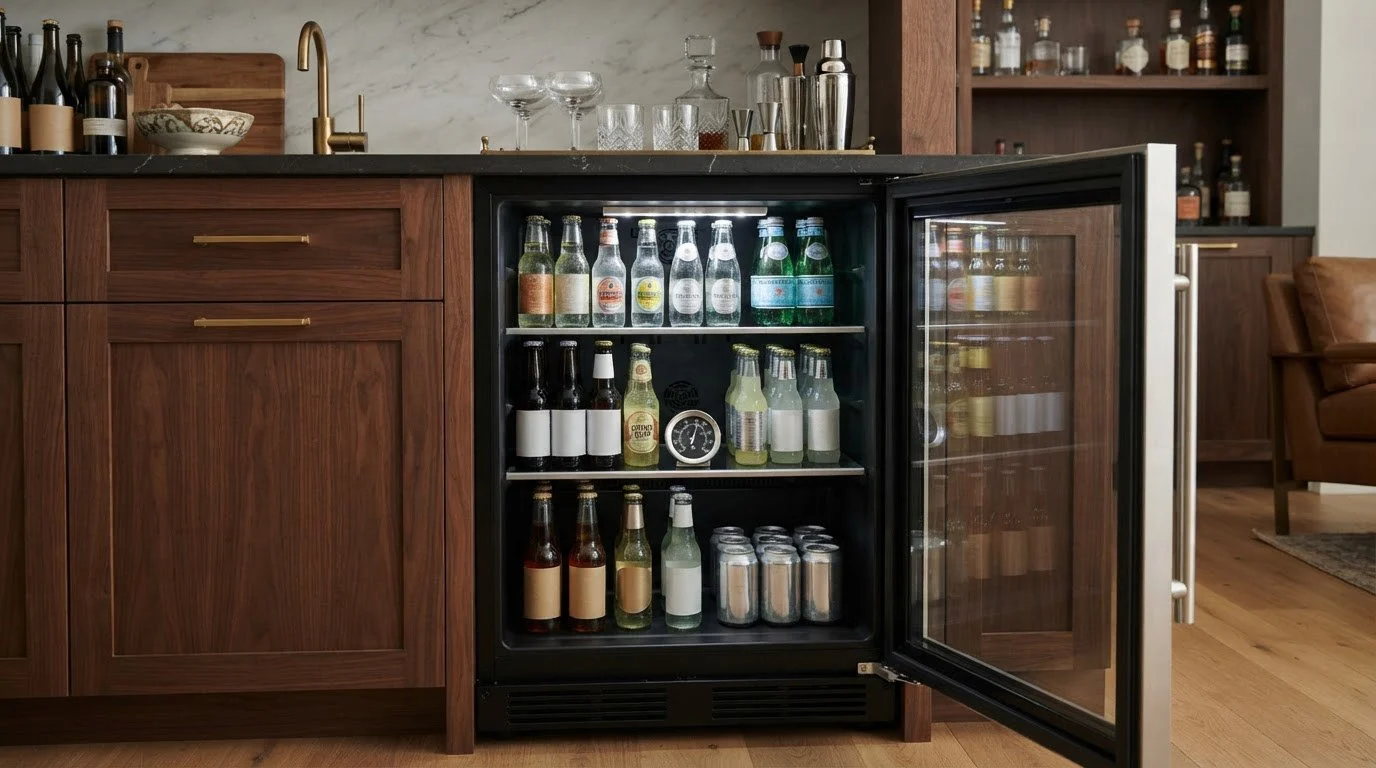
An undercounter beverage center is built into a cabinet run and usually breathes through the grille at the bottom front. When that grille collects dust, or when boxes and cleaning supplies are pushed against it, the cooling system loses its ability to reject heat. The result is drinks that stay barely cold. Vacuum the visible dust gently, and clear anything touching the toe area. Make sure the cabinet above has not been closed in with a panel that traps heat.
In older buildings and condos, bar areas are often built against a wall with minimal ventilation. Heat from nearby equipment can add to the burden, and wine or beverage cabinets facing a sunny window can struggle. A cooler, shaded location helps the cabinet hold its setting.
Many beverage centers have a glass door or a custom panel. A door that does not close fully lets warm air in, and the cooling system cannot keep pace. Close the door slowly and look for a gap along the latch side. Check the gasket for flat spots, folds, or sticky residue, and wipe it with warm water. If a can or bottle protrudes from a shelf, push it back.
If the door has a glass front, look for fogging between panes or a loose frame. Condensation on the outside of the glass can mean humid air is passing the seal. Dry the surface and watch whether it returns.
Read the display and write down the setting. A member of the household may have raised the setting to save energy or changed it while cleaning. Return to your normal value and allow time for the cabinet to respond. If the display reading differs a lot from what your hand feels inside, a sensor may be reporting incorrectly.
Avoid turning the setting to the coldest value to speed things up. It rarely speeds recovery, and it can freeze cans against the back wall.
When the outside checks do not explain it, a technician looks at the parts that make and move cold:
A cooled cabinet that is only mildly warm and one that is badly warm can come from very different faults, which is why a diagnosis takes priority over a part replacement. We provide a written estimate and nothing is repaired without your approval.
Do not remove the lower grille cover or the back panel to check the coil. The area around the compressor holds live wiring and sealed refrigerant lines. Do not use a fan blowing into the open door. Do not add ice to the cabinet to compensate, because water can run into the base. If there is a smell of burning or the cabinet is hot to the touch, switch the breaker off.
Beverage centers come in different formats. The ZIBC24PWII is a 24-inch unit that takes a custom panel and handle, and the ZIDI240HII is also 24 inches with a custom panel. Older discontinued models such as the ZDBC240NBS are still in service in many kitchens, and parts availability is part of what we explain during a diagnosis. The first letters in the number identify the type, and the rest helps match fans and sensors.
The label with the model number is usually on the inside wall or near the door frame. Our guide to finding the model number before service shows where to look.
Book when the empty cabinet does not get cold, when the compressor seems to run without a break, when ice builds up, or when water collects at the bottom. Our Monogram beverage center repair page explains how the visit runs, and the Monogram beverage centers guide covers the lineup. If you keep wine in the neighboring cabinet and it is drifting too, read our post on Monogram wine reserve temperature drift.
It depends on how many and how warm. A large load takes a long time, so judge the cabinet by how it recovers after it has been left closed, not by the first few hours.
Airflow differs between shelves, and a blocked outlet or weak fan can leave one level warmer. Rearranging the load can show whether airflow is the issue.
A glass door can lose cold more quickly than a solid one if the seal is poor or the cabinet is in direct sun. Check the gasket and the surrounding light.
A small amount of condensation can be normal, but pooling water means a drain or door seal problem. Mention it to the technician.
If it cools overnight but fails by afternoon, heat or door openings may be the cause. A visit helps if it keeps happening after you have cleared airflow and seals.
Share a few details and we’ll confirm an appointment. Prefer to talk? Call us and we’ll help right away.