

Specialized Monogram Appliance Repair in San Francisco
Mon–Sat: 8:00 AM – 7:00 PM
A door that bounces back open or never clicks shut keeps the dishwasher from starting. See what blocks it, what to inspect from outside, and when the latch needs a technician.
You close the door, hear no click, and the dishwasher stays silent. Or it clicks, the door springs back, and the cycle never begins. Either way the machine is telling you the door is not fully closed, because a switch that confirms a closed door is part of the starting circuit.
A latch on the door engages a strike on the tub frame. As it catches, it presses a door switch that tells the control the door is closed. Until that signal arrives, the dishwasher will not run water or heat. On some models a latch also locks the door while a cycle runs. If either the mechanical catch or the switch is out of line, the door seems fine but nothing happens.
Separate two cases. If the door physically will not close, something is blocking it or the hinge is off. If the door closes but the dishwasher acts as though it is open, the latch or switch is the more likely cause.
With the dishwasher off, check the racks. A rack that is not pushed all the way in, a utensil handle sticking out, or a tall item pressing against the door can stop it from closing. Inspect around the door seal for a stray piece of food, a bottle cap, or a dish that fell out. Pull the racks out and check that they ride on their tracks.
Check the area at the bottom of the door and the base of the tub for something that has fallen and wedged against the door edge. Remove any items touching the gasket.
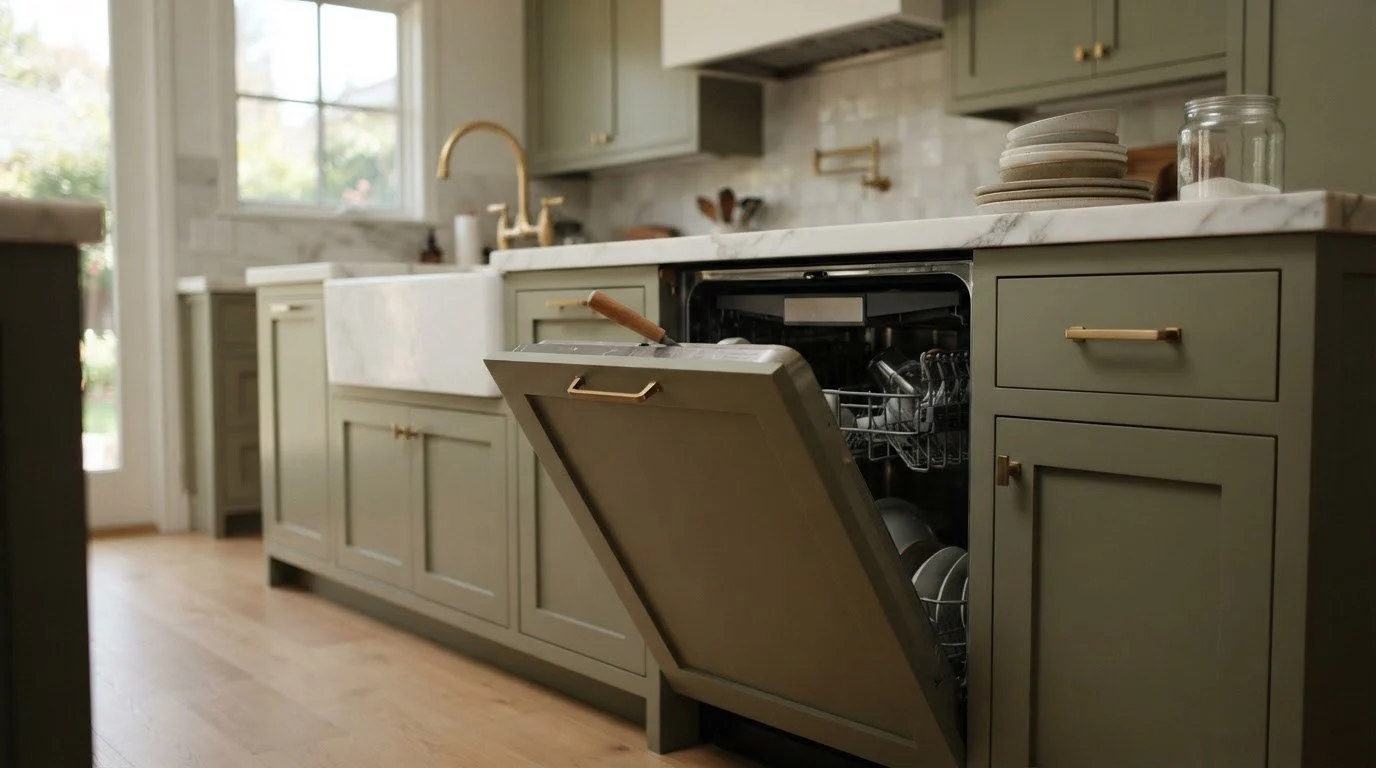
A panel-ready dishwasher carries a custom front panel that adds weight. If hinges, springs, or panel mounting are not adjusted for that weight, the door may sag and miss the latch. A door that tilts slightly, or that scrapes the cabinet next to it, may not reach the strike. Look at the door from the front. The gaps at both sides should be even.
After a countertop or floor remodel, the dishwasher can sit slightly out of level, and the door may no longer meet the latch. Condos and older homes in the Bay Area sometimes have uneven floors, so a unit that was installed years ago may have shifted. Do not try to adjust mounting brackets yourself, since they sit under the counter and are tied to the cabinet.
Look at the latch assembly at the top of the door and at the strike on the tub frame. The latch should move freely and spring back. A latch coated with detergent residue may stick. Wipe the visible parts with a damp cloth when the power is off. A strike that is cracked or bent may not engage. These are for a technician to adjust or replace.
If the latch seems to catch but nothing starts, the door switch may not be registering. A switch that has failed or been knocked out of position means the control never receives the closed signal. Testing it involves live circuits and is a technician job.
Write down any lights or beeps you see. A dishwasher with a control issue may flash its lights or beep, as covered on our page about a Monogram dishwasher control error. That entry describes a control error shown by flashing lights and a beeper, and it can look similar to a door problem when the door signal is missing. Recording what you saw helps separate the two.
After the outside checks, a technician looks at:
A written estimate comes before any repair, and nothing is replaced without your approval.
Do not tape or wedge the latch closed, and do not bypass the door switch. Do not force the door against resistance, since you can bend the hinge. Do not remove the lower panel or reach into the door frame while the power is on. If the dishwasher runs with the door ajar or you see water coming out, stop it and switch off the breaker.
An 18-inch unit such as the ZDT165SILII is a narrow built-in with a European stainless steel front. A custom-panel unit carries a different door weight than a stainless front, so the hinge adjustment differs. The model number is usually on the door edge or inside the tub, and our guide to finding the model number shows where to look.
Book when the racks are clear, the door gaps are even, and the dishwasher still will not latch or start. Our Monogram dishwasher repair page explains how a visit runs, and the Monogram dishwashers guide covers the lineup. If the dishwasher starts but stops early, our post on a Monogram dishwasher stopping mid-cycle covers that case.
Something is usually pressing against it, such as a rack or an item, or the latch is not engaging the strike.
No. The door switch will keep it from running, and forcing it risks leaks.
If the door clicks shut but nothing starts, the switch is a strong suspect. If the door will not catch, the latch or door alignment is more likely.
It can. Added weight changes how the door hangs and closes, and the hinges may need adjustment.
The latch is part of the safety design. Do not bypass it. Leave it off until it is diagnosed.
Share a few details and we’ll confirm an appointment. Prefer to talk? Call us and we’ll help right away.