

Specialized Monogram Appliance Repair in San Francisco
Mon–Sat: 8:00 AM – 7:00 PM
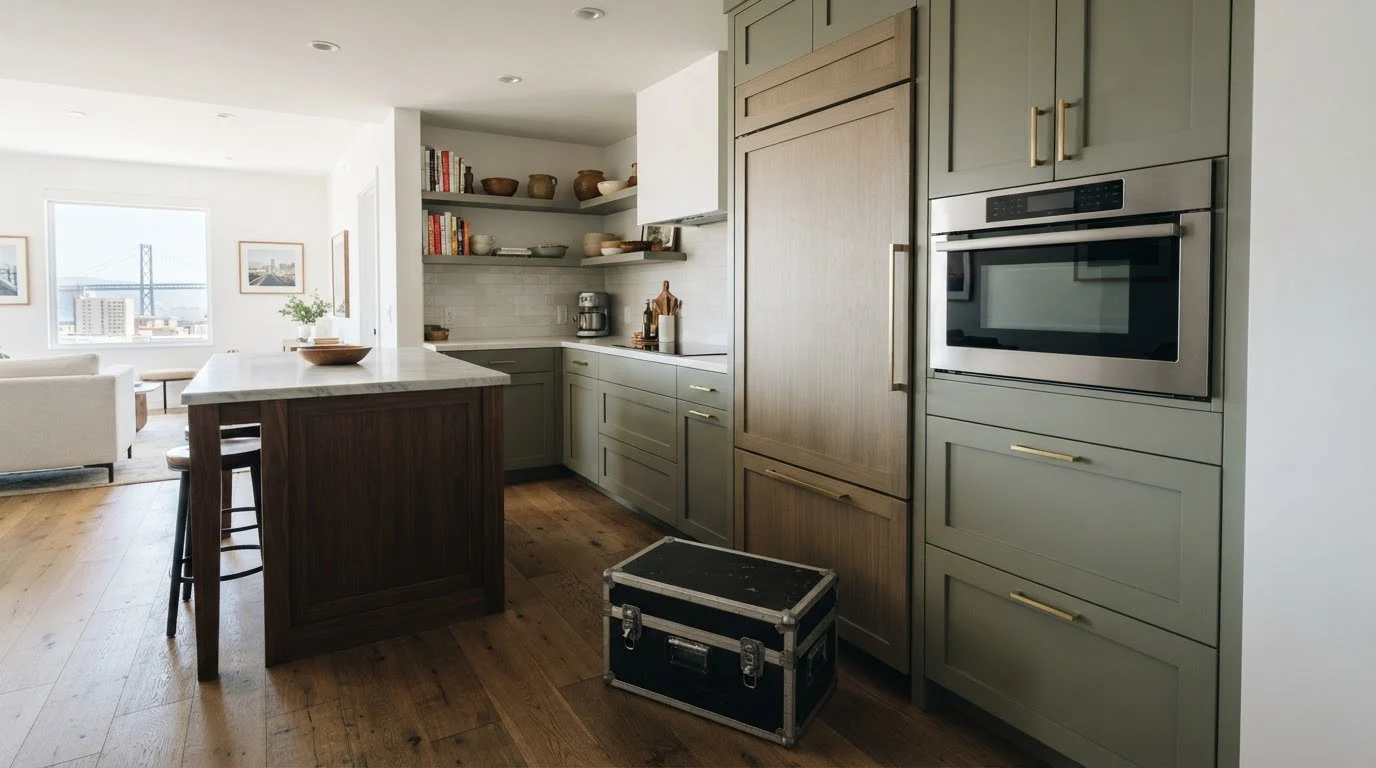
Built-in Monogram appliances hide behind panels, cabinets and trim. A little preparation helps the technician reach your appliance, protect your finishes and finish the visit smoothly.
Built-in kitchens are made to look as if the appliances grew out of the cabinetry. That is lovely until one needs service. Panel-ready fronts, flush trim, tight clearances and shared utilities can all make a repair slower if the technician cannot reach what they need. A few minutes of preparation helps a great deal.
There are three kinds of access. Physical access means being able to open doors, pull drawers and see the parts. Utility access means reaching the breaker, the water shutoff or the gas valve. Building access means getting into the home or building, with parking, elevator and management rules. All three matter.
Panel-ready models, marked with II at the end of the model number, carry cabinet-matched panels. Those panels may be heavy, fitted with special hardware, or part of a custom cabinet frame. If you know the cabinetmaker or installer, ask how the panel comes off and tell the technician. Do not force trim or pry a panel to see behind it. Damaged finishes are expensive to restore, and a technician will know how to handle them.
A built-in column refrigerator sits in a frame with a trim kit. A wall oven is supported by a cabinet and wired to a junction, and a rangetop or cooktop is set into a counter with a gas or electrical connection beneath. Hoods hang from the wall or ceiling with ducts hidden behind the finish. Each of these can limit how far something can move. Our Monogram column refrigerator repair, Monogram wall oven repair and Monogram cooktop repair pages describe what that means for each type.
In San Francisco and across the Bay Area, many kitchens are in flats, condos and hillside houses. Some buildings need advance notice for contractors, a certificate of insurance, a reserved elevator, or limited work hours. Parking may be limited or sloped, and entrances may involve stairs. If your building has rules, tell us when you book so we can plan. If you are a property manager, share the contact for the unit and any approval needed to enter.
Someone who can approve the work should be present, or reachable by phone. We diagnose first, give a written estimate, and do nothing without approval. If the owner is away, a manager or tenant can let us in, but the approval must come from the owner or a decision maker such as the manager.
Gather the model number, a description of the symptom and anything shown on the display. Read how to find the model number before service if you are unsure, and what to record before resetting an error code for display details. Photographs of the installation help; the technician can see the clearances and the trim before arriving.
Once the diagnosis is complete, the technician explains the findings, the estimate is written, and you decide. If a part must be ordered, we explain what is needed and plan a return visit. The appliance is left clean and closed up. For the full list of what we service, see services, and for model references, the models index.
If a cabinetmaker or contractor installed your kitchen, a quick call can save time at the visit. Ask whether the panels are fastened by screws, magnets or brackets, whether there is an access hatch or removable toe kick, whether the appliance has a dedicated shutoff, and whether anything in the opening was modified from standard. For rental units, ask the building manager about key access, quiet hours and where waste can be left.
Write the answers beside the model number and keep them somewhere easy to find. It takes ten minutes and often shortens every future visit to the kitchen, whatever the brand or age of the appliance involved.
Stone counters, hardwood floors and custom cabinet panels can all be marked by heavy tools and by an appliance being slid forward. We bring floor protection and move carefully, but you can help by telling us about fragile surfaces and by clearing the path from the entrance to the kitchen. If your hallway is narrow or your stairs are steep, mention it so that we plan how to bring tools and parts in without scraping anything.
No. Leave that to the technician, who knows the clearances and will protect the cabinetry and floor.
Only if it is needed for the repair. Many checks can be done without removing it, and we explain the plan first.
Tell us when you book. We plan the visit to match the allowed hours and any paperwork your building requires.
If the repair is likely to need access inside the cabinet, yes. Move perishables to a cooler and leave shelves clear.
The estimate must be approved by the owner or someone empowered to decide for them, such as a property manager. Tenants can provide access.
Share a few details and we’ll confirm an appointment. Prefer to talk? Call us and we’ll help right away.