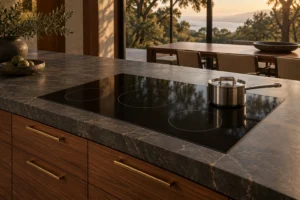
Cooktops: Gas and Induction Models Compared
Six Monogram cooktops, gas, liquid propane and induction, in 30 and 36 inch widths, with typical faults, safety notes and checks owners…

Specialized Monogram Appliance Repair in San Francisco
Mon–Sat: 8:00 AM – 7:00 PM
A cooktop that lights unevenly, cuts out mid-boil or ignores your touch has a specific cause we can find.
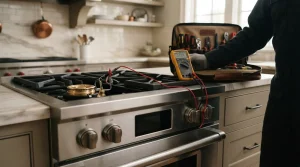
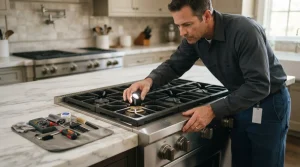
A cooktop looks simple from above, but two very different machines hide under the Monogram name: gas models with sealed burners and spark ignition, and induction models with magnetic coils, cooling fans and touch controls. They fail in different ways, so the first thing we do is establish which kind you have. Our technicians repair both in San Francisco homes, condos and Bay Area houses.
On a gas surface, owners describe burners that will not light, burners that click on and on, flames that look weak on one side, and a smell of gas near the unit. The usual suspects are food residue in a burner port, a cap sitting crooked, a damp igniter, or a spark module that keeps firing. A technician checks each in turn and also confirms the gas reaches the burner at all. The 36-inch Monogram ZGU36ESLSS is a current gas cooktop, and four older 36-inch Professional Stainless Steel gas models are listed as discontinued, one of which is Monogram ZGU36N4DDSS repair, a natural gas version.
Induction heats the pan itself through a magnetic field, so there is no flame to inspect. People report a zone that shuts off while cooking, an error tone that repeats, a zone that never starts, or a surface that responds slowly. Heat from the pan, a pan that does not suit induction, a blocked cooling vent beneath the unit, and failing electronics can all produce the same symptom. That is why our post on an induction cooktop that shuts off separates the pan, the airflow and the electronics. The current Monogram ZHU30RSTSS repair page covers a 30-inch induction cooktop.
A glass control panel can ignore touches because of moisture, a smear of grease, a lock setting, or a fault in the panel or its board. Wiping the surface with a soft dry cloth is a reasonable first step. If the panel still fails, the post on cooktop touch controls not responding describes what a technician looks at next, including whether the problem follows a power interruption.
We listen to the history first: whether it began after a spill, a cleaning or a power flicker, and whether one burner or zone or all of them are affected. On gas, we watch ignition and flame on each burner. On induction, we test with a suitable pan and watch what the controls and fans do. When the cause is clear we explain it, give you a written estimate, and wait for your approval. Nothing is repaired before that.
A drop-in cooktop sits in a countertop cutout over cabinets or an oven. Gas models need a shut-off valve and a flexible connector under the counter; induction models need a hard-wired electrical supply and room underneath for airflow. In tight San Francisco kitchens, a drawer or an oven directly beneath can limit access. Clearing the space below makes the visit quicker, and the guide to service access for built-in Monogram appliances explains how. Stone countertops also mean we avoid pulling the unit unless it is needed.
Boil-overs deserve a mention. On a gas surface, liquid that runs into a burner port or an igniter can cause days of poor lighting after it dries. On induction, sugary spills left on the hot glass can mark it, and liquid that finds its way under a damaged edge can reach the electronics. If a spill happened shortly before the fault began, tell us, because it shapes where we look first.
A smell of gas means leaving the home without touching any switch and calling the gas utility or 911 from outside. A gas burner that clicks repeatedly without lighting should be turned off. Any burning smell, sparking, a cracked glass surface, or a breaker that trips right after reset means switching the cooktop off at the breaker and leaving it off. Do not open the unit, touch gas fittings or bypass a switch, and do not keep using a surface that shuts itself off in the middle of cooking.
The ZGU prefix marks a gas cooktop or rangetop, and ZHU marks an induction cooktop, so the first letters already tell us which diagnosis path to follow. The rest identifies width and finish. The label is usually found under the cooktop, on the underside of the glass or body, which is hard to read once it is installed. If you cannot reach it, the post on finding the model number before service suggests other places, such as the installation papers.
We confirm your address in San Francisco or the Bay Area, discuss the symptom, and arrive with a plan for the fuel type you have. We test, explain, and quote in writing. If the repair is not sensible, we say so, and our repair or replace post helps you weigh it.
The full lineup is in our Monogram cooktops guide. If your gas burners sit in a professional-style body, see Monogram rangetop repair. If an oven sits below the burners in one body, see Monogram range repair. You can check our San Francisco service area or start a request through the contact page.
A hot pan, a pan the cooktop does not like, blocked cooling airflow and a failing component can all cause it. We test with a suitable pan and check the airflow before looking at the electronics.
A pan needs a magnetic, flat base to work well on induction. If a zone refuses a known good pan, that suggests a fault worth diagnosing.
Yes. Gas work centers on ignition, burners and supply, while induction work centers on the coils, cooling and controls, so we plan the visit around which one you own.
Not necessarily. Moisture, grease or a lock setting can block touch. If a dry wipe does not help, the panel or its board may need testing.
You get an explanation of the cause and a written estimate. We make no repair until you approve it.
Six Monogram cooktops, gas, liquid propane and induction, in 30 and 36 inch widths, with typical faults, safety notes and checks owners…
Warm drinks, fogged glass, freezing cans and noise in Monogram beverage centers, checked against the seal, airflow and installation. Estimate before any…
Uneven cooling, constant running, drips and door faults on integrated Monogram columns, checked with the cabinetry and airflow in mind. Cabinet heat…
Cooling, frost, leaks and dispenser faults on Monogram French-door and wide built-ins, diagnosed before any part is replaced. We start with the…
Drain, fill, latch and cycle faults on Monogram dishwashers, with each flashing-light message linked and a written estimate first. Estimate comes first.
Frost, soft food, drawer faults and warm cabinets on Monogram built-in freezers, traced to the seal, airflow or defrost cycle before repair.…
Low production, hollow cubes, leaks and blinking lights on Monogram ice makers, with linked code pages and a diagnosis before repair. Estimate…
Built-in microwaves and Advantium speed ovens that stop heating, show SENSOR ERROR or stay locked, diagnosed in your San Francisco or Bay…
Hoods that are loud, weak, light-only or switching on alone, diagnosed in San Francisco and Bay Area kitchens with a written estimate…
Dual-fuel, all-gas and induction Monogram ranges diagnosed in place in San Francisco and the Bay Area, with a written estimate before any…
Gas rangetop burners that will not light, click, or burn yellow, diagnosed in your San Francisco or Bay Area kitchen and repaired…
Built-in Monogram wall ovens and steam ovens that heat slowly, cook unevenly or show an F-code, diagnosed in your San Francisco or…
Temperature drift, vibration, fogged glass and display faults on Monogram wine reserves, diagnosed gently so your collection stays settled. Your bottles stay…
Share a few details and we’ll confirm an appointment. Prefer to talk? Call us and we’ll help right away.