

Specialized Monogram Appliance Repair in San Francisco
Mon–Sat: 8:00 AM – 7:00 PM
When a built-in oven drags toward its set temperature, the delay usually traces to an element, a sensor or heat escaping around the door. Here is how to tell which.
The preheat tone used to come quickly. Now the oven sits there with the display climbing slowly, or the tone sounds and the food still seems to cook as if the oven were cool. A long wait is irritating on a weeknight, but it is also useful information: heating power, temperature reading or heat retention has changed.
A wall oven preheats by running its heating elements while a probe inside the cavity reports the air temperature to the control. When the probe says the target has been reached, the control signals the tone and begins cycling the elements to hold it. Three things must work together: the elements must deliver heat, the probe must read honestly, and the cavity must hold the heat it makes. A fault in any one lengthens the wait.
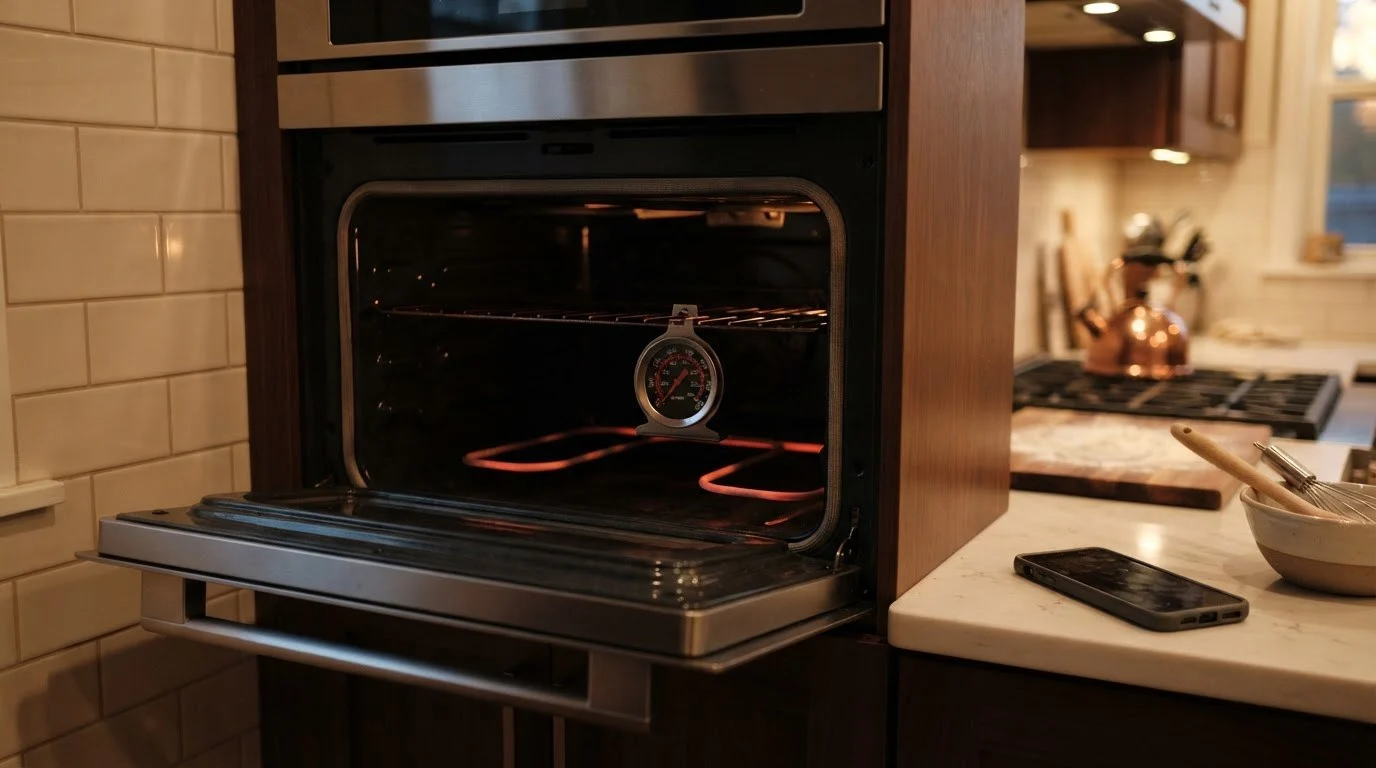
Many electric ovens use both the bake element and the broil element during preheat to speed things up. If one has failed, the oven still heats, just slowly. Looking through the glass, you may see only one element glowing, or one that glows in patches. This is probably the most common explanation for a long preheat in an otherwise normal oven.
A drifting sensor can make the oven think it is warmer than it is, which gives you a quick tone and an under-heated cavity, or cooler than it is, which gives you an extended preheat and overcooked food. The symptoms vary, but the key hint is a mismatch between the display and what the food tells you.
A torn or flattened gasket, a door that does not close squarely, or hinges that have loosened all let heat escape. The elements keep working but cannot raise the temperature as fast. If you feel warm air along the door edge when the oven is on, or see discoloration on trim near the seal, that is worth noting.
A relay that does not close fully delivers power to the element intermittently. The result is slow, inconsistent heating and sometimes a clicking sound at the control. This is a technician’s diagnosis; do not open the control panel.
An electric oven draws a large load. If one leg of its supply is weak or a breaker is aging, the elements run at reduced output. Other appliances on nearby circuits may also act oddly. Resetting a tripped breaker is an owner action; investigating why it trips is not.
Stone slabs, heavy cast iron, extra racks or foil-lined floors act as heat sinks. The oven may be fine, but the thing it is heating is slow to warm up. Take everything out before concluding anything.
The number on the screen is the control’s belief about the cavity, not a measurement you can verify by eye. Some ovens announce the target early, because the air has reached it while the walls and racks are still catching up. Food placed in at that moment meets a cavity that is hot in the air and cooler in the metal, and it cooks as if the oven were behind. Giving the oven a little more time after the tone is a legitimate habit, but if you now need much longer than you used to, the underlying cause has changed and should be looked at.
Do not run a clean cycle to push the oven harder. Do not open the door repeatedly to peek, because that resets progress and misleads your own timing. Do not remove the lower cover, the insulation or the back panel. If you smell burning, see sparks or notice a hot, sharp electrical odor, switch off the oven at its breaker and leave it off.
Book if only one element glows, if the oven never quite reaches its setting, if the gap between display and food keeps widening, or if any error code returns after one reset. A slow preheat that has crept up over months is less urgent than one that appeared suddenly, but both deserve a diagnosis.
Model details help us bring the right part. The Monogram ZKS90DPSNSS is a 27-inch electric wall oven in the Statement series, and the Monogram ZTD90DPSZSS is a 30-inch electric wall oven in the same series; the label is usually on the frame when the door is open. If you are unsure where to look, the article on how to find the model number before service shows the usual places.
The technician first confirms the symptom by watching a heat-up, then tests the elements, probe and door fit, and examines supply conditions at the oven. A written estimate comes before any repair, and nothing is done without your approval. Wall ovens in Bay Area homes are often framed into custom cabinetry, so access to the connections can take planning, which we handle when scheduling.
Read more on our Monogram wall oven repair page or browse Monogram wall ovens to see where your oven fits.
It varies by model and temperature, and the owner manual gives the expected range for yours. What matters is a change from how your oven used to behave.
Yes. Lost heat around the door means the elements have to work longer to reach and hold the setting.
Usually yes if there is no burning smell, sparking or error code, but cooking times will be off. Stop using it if any of those appear.
It confirms the symptom, not the cause. It is a good way to describe the problem to the technician.
Share a few details and we’ll confirm an appointment. Prefer to talk? Call us and we’ll help right away.