

Specialized Monogram Appliance Repair in San Francisco
Mon–Sat: 8:00 AM – 7:00 PM
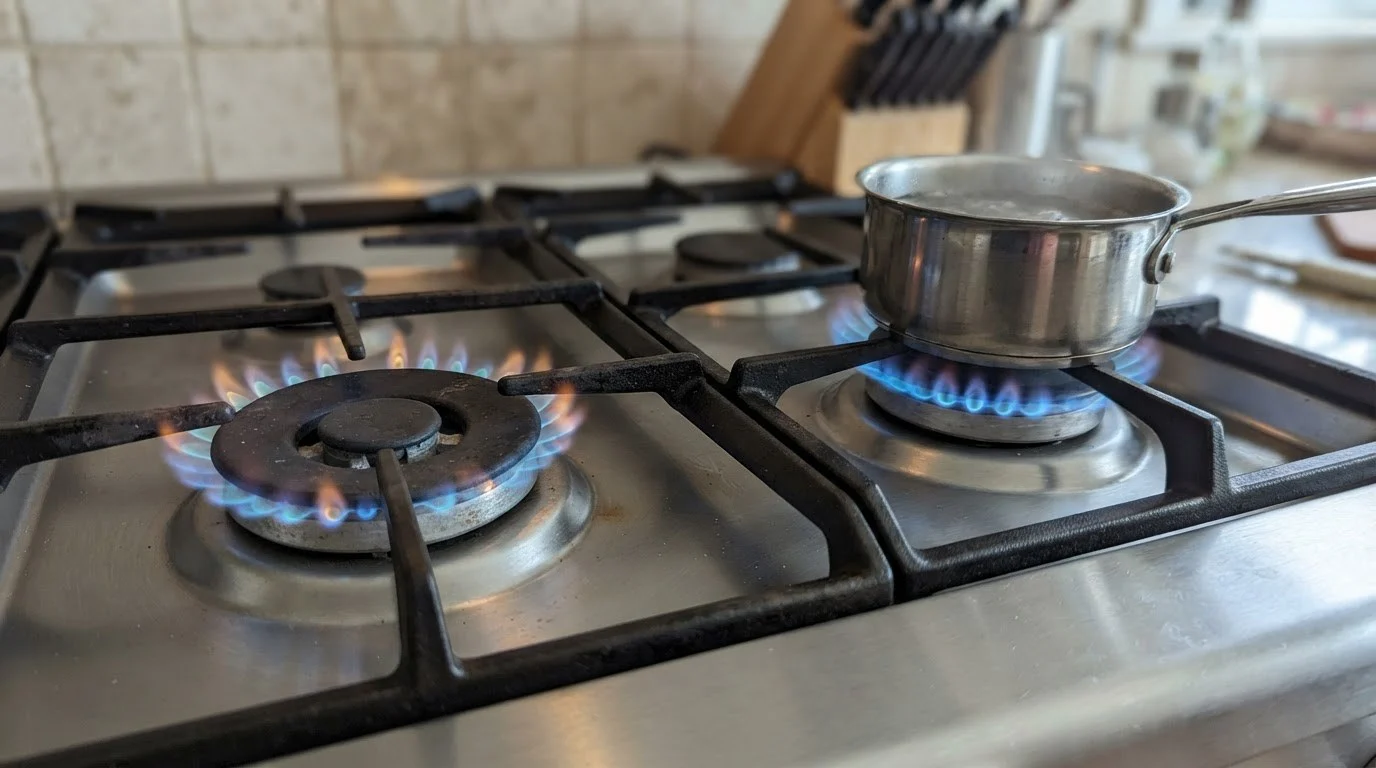
Gas flames should burn evenly and mostly blue. Yellow tips, lifting flames or a lopsided ring point to blocked ports, a misseated cap or a mismatch in setup.
Gas smell comes first. If you notice a gas odor at any time, do not use switches or flames, leave the home, and call the gas utility or 911 from outside.
A healthy gas burner makes a ring of small, steady flames that are mostly blue. When a ring turns yellow at the tips, burns tall and ragged, lifts off the burner or burns only on one side, the mixture of gas and air has changed. Soot on pots, a faint odor from cooking or a ring that looks partly out are all clues worth taking seriously.
Yellow or orange flame means incomplete combustion. Too little air or too much gas, or something burning that does not belong there, gives a yellow tint. A flame that lifts or floats above the burner often means too much pressure or a port arrangement that has shifted. A flame that burns on only one side suggests some ports are blocked or the cap is not seated.
Brief flashes of orange are normal when a burner first lights or when salt or grease burns off. A flame that stays yellow, leaves soot or looks different from last month is not.
Food that has dried in the ports narrows them and changes the flame pattern. This is the most frequent reason a ring burns unevenly.
A cap that sits crooked or rocks on its base disturbs airflow and deflects the flame. After cleaning, a cap can easily be put back slightly off.
Water left in the ports after washing makes flames sputter and look yellow-orange until it burns off. Grease film from cooking does something similar.
Monogram gas units come in natural gas and liquid propane versions, and each is set up for its own gas. A unit configured for one gas but connected to the other burns badly and is not safe to run. A mismatch is a technician matter, as is any change to orifices or regulators.
Strong drafts from an open window, a hood running at full pull, or a unit set too tightly against cabinetry can disturb a flame. Try the burner with the hood off and still air to see whether the effect changes.
If every burner burns tall or soft at the same time, the cause may be upstream of the cooktop. That is a job for the gas utility or a qualified technician, never for an owner.
Flame problems usually reveal themselves through cookware before anyone looks at the burner. A pot bottom that turns black, a kettle that takes on a sooty film, or a pan that heats unevenly across its base all point to a ring that is not burning cleanly. If you are used to the same pot behaving a certain way, treat a change as a signal to look at the flame with the lights low, where color is easy to judge.
Photographs help. A phone picture of the lit burner from above, taken in dim light, gives a technician something to compare with the burner as it was meant to look.
Do not adjust any gas valve, screw or orifice, and do not touch gas fittings. Do not try to fix an odd flame by increasing the knob setting. Do not keep cooking over a burner that is making soot or leaving a bitter smell. If every burner looks wrong or you notice a gas smell, stop using the rangetop and shut the knobs.
Book a diagnosis when cleaning and reseating do not restore a blue, even ring; when several burners misbehave together; after a move, a conversion or a change in gas service; or whenever the flame lifts, flashes back or smells wrong. Treat a gas odor as urgent, not as a booking question.
Setup matters, so the model label is worth finding; our guide on how to find the model number before service helps. In the catalog, the Monogram ZGU36N4DDSS is a 36-inch natural gas unit and the Monogram ZGU36L4DDSS is its liquid propane counterpart, both discontinued, which shows why the fuel type on the label matters. If your issue is clicking instead of color, see burner keeps clicking.
The technician inspects burner heads, caps, ports and ignition, confirms the unit matches the gas supplied, and checks the surrounding conditions. Gas connections are handled only by trained people, and a written estimate comes before work. Nothing is repaired without your approval. In Bay Area kitchens with a built-in rangetop, a vent hood above and cabinets on either side, we plan around access and clearances.
For detail on the work, see Monogram rangetop repair, or browse Monogram rangetops.
A brief orange flicker at lighting is normal. A flame that stays yellow, makes soot or smells off needs attention.
With the burner cold, a wooden toothpick is enough to clear residue. Do not widen the ports or use metal tools.
The cap may be seated slightly off, or water is still in the ports. Let the parts dry and reseat the cap flat.
Yes. A unit set up for natural gas and supplied with propane, or the reverse, burns poorly and is not safe. A technician confirms the match.
If the flame is mostly blue and steady, careful use is reasonable. If it makes soot, lifts or smells wrong, stop using it.
Share a few details and we’ll confirm an appointment. Prefer to talk? Call us and we’ll help right away.