

Specialized Monogram Appliance Repair in San Francisco
Mon–Sat: 8:00 AM – 7:00 PM
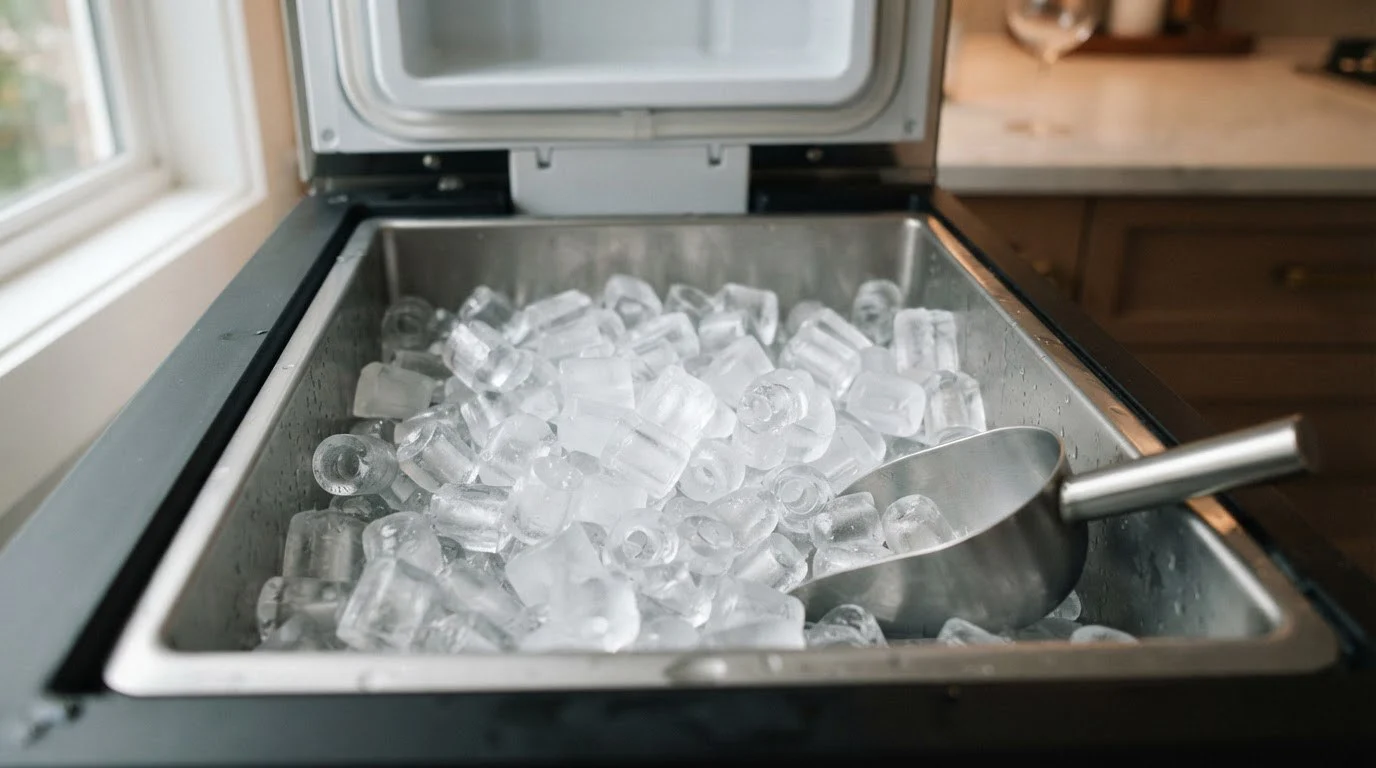
Thin, hollow or shrunken cubes usually point to a short water fill or a freezing problem, not a failed machine. Here is what causes it and what you can check first.
You open the bin and the ice looks wrong. The cubes are thin shells, they have a hollow center, or they are noticeably smaller than they were a few weeks ago. The machine still runs and the bin still fills, so it is easy to ignore, but the shape of the ice is one of the clearest clues an ice maker gives. Each cube comes from one fill and one freeze, and a bad shape means one of those two steps is not finishing the way it should.
An ice maker freezes water in a mold or on an evaporator surface, then releases the finished ice. If the water that reaches the mold is short, the cube forms with less material and ends up thin or hollow. If the water arrives correctly but freezing is incomplete, the cube is soft, cloudy or fused with its neighbors. If minerals have built up on the freezing surface, ice forms unevenly and sheds in odd shapes.
So the useful question is not “is the ice maker broken?” but “which half of the cycle is off, the water side or the cold side?” That is exactly the split a technician makes first.
Do not pull the unit out of its opening, remove panels, or chip at ice or scale inside the freezing area with a tool. Do not run household descaler through the water line unless your manual describes the exact cleaning procedure for your model; the wrong product can leave residue that ends up in your ice. Do not unplug the unit repeatedly hoping to reset it. One controlled power reset is reasonable; repeated cycling hides the pattern a technician needs to see.
Book a diagnosis if the cubes stay small after you have confirmed the valve, the line and the airflow. Book sooner if the maker has stopped harvesting, if water drips from the front, or if the bin has frozen into a single lump. A cleaning reminder that has turned red also means the machine needs attention before ice quality falls further.
The same fault can look different on different machines. A cube-style undercounter unit like the Monogram ZIBI240HII shows trouble in its cube shape, while a clear-ice machine shows it in the slab. If you are not sure which type you have, the label is usually on an inside wall or behind the bin; see how to find the model number before service. If the machine is making less ice rather than odd ice, our guide to a Monogram ice maker with low production covers that side.
A visit starts with diagnosis, not parts. The technician checks the water path first, measuring what actually reaches the mold, because that settles the split between a supply problem and a cooling problem. Then the evaporator surface, the harvest action and the sensors are checked in turn. You receive a written estimate before any work begins, and nothing is repaired without your approval.
For built-in installations in San Francisco flats and Bay Area condos, access often decides the plan. A unit tucked into custom cabinetry may need to be reached from the front only, which is normal for the trade and is planned for in advance. You can read more about our Monogram ice maker repair work, or browse the Monogram ice makers lineup to match your unit to a series.
Not usually. Hollow or thin cubes most often come from a short water fill or scale on the freezing surface, and both can be corrected. It becomes a bigger concern when the ice stops altogether or the bin freezes solid.
It can, if the filter was restricting flow. If the cubes stay small after the filter, the valve and the supply line are the next suspects, followed by scale and the cooling side.
Ice that looks thin or hollow is a quality problem, not a safety signal on its own. If the ice tastes or smells off, discard it and have the machine cleaned and checked before using it again.
A slow change usually means scale building up or airflow getting worse. A sudden change points more toward a supply interruption, a kinked line or a sensor that has started reading incorrectly.
Share a few details and we’ll confirm an appointment. Prefer to talk? Call us and we’ll help right away.