Cooktop Repair: Gas and Induction in San Francisco
Gas burners that misfire and induction zones that cut out or ignore touch, diagnosed at your San Francisco or Bay Area counter…

Specialized Monogram Appliance Repair in San Francisco
Mon–Sat: 8:00 AM – 7:00 PM
Gas and induction cooktops fail in completely different ways, so the first job is knowing which one you own.
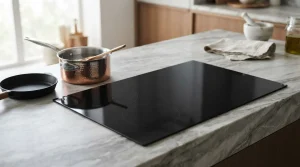
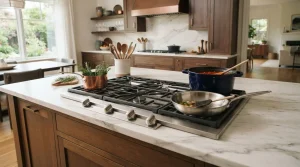
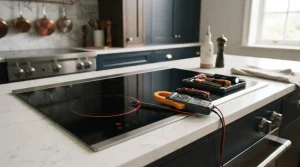
A Monogram cooktop is a flat cooking surface set into the counter, and it can burn gas or heat pots magnetically through glass. Bay Area kitchens use both, sometimes on islands where the unit is visible from every side. Here is the catalog, the usual complaints and what is safe for owners to try.
The ZGU prefix marks a gas cooktop or rangetop, and fuel type matters. A liquid propane unit and a natural gas unit use different burner parts, so state yours when you call.
It is usually on the underside of the cooktop, accessible from the cabinet below, or on the underside of the glass or frame edge on some models. If the cabinet below holds a drawer, take the drawer out first and photograph the label.
Wet or dirty electrodes cause both. Boil-overs that run onto the burner base are the usual trigger. See burner keeps clicking.
A yellow, noisy or lifting flame suggests blocked ports or misaligned caps. A yellow uneven flame describes the checks.
Leave, avoid switches and call the gas utility or 911 from outside.
Induction units cut power if a pan is the wrong material, a sensor overheats or the cooling fan underneath is blocked. See induction cooktop shuts off.
Moisture, a spill on the glass or a locked panel can interrupt touch input. Touch controls not responding goes through the order.
A crack on the surface is a reason to stop using the unit and switch it off at the breaker.
Cooktops in this line have no published code list we rely on. If the display flashes a symbol or number, write it down; what to record before resetting helps. Related lists are at the code hub.
A cooktop sits in a cutout above cabinets, with gas or power underneath. Induction models need airflow below the glass, so a drawer stuffed with pans can block it. Gas models rely on hood ventilation above, so a weak fan makes residue and heat worse.
Do not lift the unit from the counter or open the burner box.
A gas cooktop collects residue around the burner bases, so wipe the surface after it cools and keep the caps seated. An induction cooktop is smooth, but a hard spill that bakes onto the glass can cause hot spots and mark the surface. Wipe sugary spills as soon as the glass is safe to touch and use a cleaner meant for glass.
On induction, check that your pans have a flat base and are the right size for the cooking zone. A warped pan can chatter, vibrate or trigger a shut-off. On gas, check that the pot sits steadily on the grate without rocking.
When you request a visit, tell us the fuel or the glass type, what you were cooking and what the unit did, because a pattern on one burner points to a different cause than a failure everywhere.
Book Monogram cooktop repair. We diagnose first, write an estimate and wait for your approval. Pair it with Monogram range hoods if airflow is a concern.
Six: one current gas model, one current induction model and four discontinued 36 inch units.
A wrong pan, overheating or blocked airflow underneath are common. A technician tests the sensors and fan.
Yes. Natural gas and liquid propane use different burner parts, so tell us which one you have.
No. Switch it off at the breaker and ask for a visit.
Usually underneath, from the cabinet below, or on the frame edge.
Gas burners that misfire and induction zones that cut out or ignore touch, diagnosed at your San Francisco or Bay Area counter…
Repair for the Monogram ZGU36ESLSS, a current 36-inch gas cooktop: ignition, flame and knob problems diagnosed in San Francisco homes with a…
Repair for the Monogram ZGU36L4DDSS, a discontinued 36-inch Professional Stainless Steel gas cooktop set up for liquid propane, in Bay Area homes.
Monogram ZGU36L6DSS service: a discontinued 36-inch Professional Stainless Steel cooktop on liquid propane, with burner and ignition faults diagnosed in writing.
Help for the Monogram ZGU36N4DDSS, a discontinued 36-inch Professional Stainless Steel natural gas cooktop, with burner and ignition diagnosis in San Francisco.
Monogram ZGU36N6DSS repair for a discontinued 36-inch Professional Stainless Steel natural gas cooktop, including ignition, flame and knob faults in the Bay…
Service for the Monogram ZHU30RSTSS, a current 30-inch induction cooktop, covering touch controls, shutoffs and power faults in San Francisco kitchens.
Five Monogram beverage center models, 24 inch and older units, with notes on weak cooling, glass doors, condensation and the checks owners…
Seven built-in Monogram refrigerator models from 30 to 42 inches, where to find the model label, the complaints we see most, and…
Six integrated Monogram column refrigerators from 24 to 36 inches, three of them discontinued, with label locations, typical faults and safe checks…
Seven Monogram dishwashers in 18 and 24 inch sizes, the eight verified light and message entries, and the checks owners can make…
Five Monogram freezer models, from an 18 inch unit to 36 inch columns, with advice on frost, warm spots and safe checks…
Five Monogram ice maker models, with the four indicator codes, advice on cleaning lights and low production, and safe owner checks.
Six Monogram microwave and Advantium models in 27 and 30 inch widths, the two verified messages, and safe checks for sparks, heating…
Six Monogram range hoods in 30 to 48 inch widths, custom, chimney and professional styles, with advice on noise, weak airflow, lights…
Seven Monogram Statement ranges, dual-fuel and all-gas, in 30, 36 and 48 inch widths, with notes on igniters, ovens and the safe…
A practical look at professional-style Monogram rangetops, with typical burner and ignition faults, installation points, gas safety and what to check before…
Seven Monogram wall ovens in 27 and 30 inch widths, electric and steam, with a plain explanation of F-codes and the safe…
Five Monogram wine reserve models in 24 and 30 inch widths, one discontinued, plus advice on temperature drift, noise and safe checks…
Share a few details and we’ll confirm an appointment. Prefer to talk? Call us and we’ll help right away.