Wine Reserves: Models, Zones and Typical Issues
Five Monogram wine reserve models in 24 and 30 inch widths, one discontinued, plus advice on temperature drift, noise and safe checks…

Specialized Monogram Appliance Repair in San Francisco
Mon–Sat: 8:00 AM – 7:00 PM
A wine reserve is meant to be steady. We chase down drift, noise and moisture without disturbing more bottles than we have to.
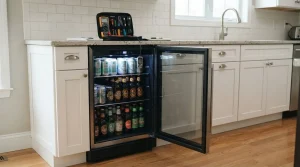
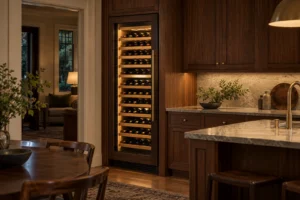
A Monogram wine reserve is built to hold bottles at a steady, gentle temperature, and that steadiness is the whole point. When the reading drifts, the display flickers or a rack sounds different when the compressor starts, the collection inside is what suffers. We repair integrated wine reserves in San Francisco homes, from compact 24-inch units under a bar to the 30-inch columns in a dedicated cellar wall.
Wine reserves with two zones compare readings from separate sensors, and a drift in one zone while the other stays steady is a strong clue. Causes range from a seal that no longer closes evenly to a fan that has slowed, to a control that misjudges the cabinet. Our write-up on wine refrigerator temperature drift shows how to separate a real fault from a normal swing after a door has been opened.
Wine dislikes vibration, so a noisy reserve deserves attention. A loose rack, bottles touching one another or the side wall, or a fan blade rubbing can be the reason. A compressor that rattles when it starts may be sitting on an uneven floor or touching the adjoining cabinet.
Fogged glass, wet shelves or drips on the base mean warm moist air is getting in. A door that cannot close because of a panel too heavy for the hinge is a common reason, and so is a gasket with a gap in one corner.
Interior lights that go out and a display that blanks or shows odd readings are separate issues from cooling, but they can be a sign that the control board has taken a knock from a power surge or a loose connection.
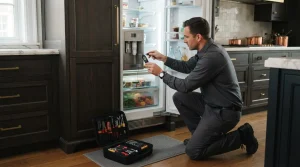
A wine reserve needs a gentle approach. We read the temperature at several points rather than trust a single display, check how both zones respond when the door is closed for a while and look at the seal and the airflow. We avoid shifting your bottles more than necessary, and we ask you to move anything valuable only if the work requires it.
After the diagnosis you receive a written estimate. We repair nothing without your approval.
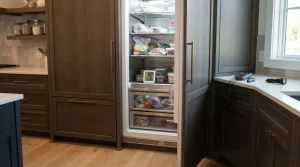
Wine reserves are often fitted into spaces never designed for them: under stairs, in a butler pantry, beside a bar sink. They need ventilation at the base or the front grille, and a unit that has been wrapped in cabinetry on all sides runs warm and works hard. A reserve beside a dishwasher or an oven shares heat with it.
San Francisco homes bring extra variables. A reserve in a ground-floor wine nook may cool differently from one on an upper floor with afternoon sun, and a building that shakes from nearby traffic or cable car lines can pass vibration into the cabinet. The panel on a panel-ready model adds weight, so the hinge and the level count.
The ZIW designation marks a Monogram wine reserve. The ZIW241NBWII is a 24-inch model and the ZIW303NPPII is a 30-inch one, both needing a custom panel and handle. The ZIWD24PWII accepts a stainless or custom panel, and the older ZIW30GNDII is discontinued but still in many homes. The label is usually on the inside wall, and our article on finding the model number before service shows the typical spots.
Do not open the back, disconnect a sensor or tilt the unit. Do not wedge the door shut with tape.
A refrigerator can tolerate a few degrees of wandering. A wine reserve is bought for the opposite reason, because long storage rewards a calm, even environment. A reading that climbs a little each afternoon and falls at night, or a zone that never quite reaches the setting, is worth noting with the dates. Those patterns help us separate a sensor that reads wrongly from a cabinet that is truly warm, and they save time at the visit. If you keep a log of bottles in the reserve, add a line each time you notice a change, and keep it with the model number.
If the cabinet is clearly warm to the touch and stays that way, move the bottles somewhere cool and dark. Switch the unit off at the breaker if there is a burning smell, a buzz from behind or water around the plug. A reserve with fogged, dripping glass for several days should be seen before mold starts on labels or corks.
We confirm the model and the zones, test the temperature with the door closed for long enough to learn something, and explain what we find. If a fan, a sensor or a control is at fault, the written estimate lists it. If the problem is the installation, we tell you plainly.
For the full lineup, see Monogram wine reserves. Neighboring cabinets of a similar kind are covered under Monogram beverage center repair.
Each zone has its own sensing and airflow. A fan, damper or sensor affecting one zone leaves the other normal, which is why we check them separately.
Yes. A short swing that settles back is normal. A reading that stays off after the door has been shut for a while is a reason to book.
It can be unkind to wine kept for years. A rattle usually means something is loose, touching or on an uneven floor, and it is worth fixing.
Warm moist air is entering, often through a door that does not seal or a panel that makes the door heavy. We check the gasket and the hinge.
Not always. We ask you to move bottles only when access to a part requires it, and we tell you beforehand.
Five Monogram wine reserve models in 24 and 30 inch widths, one discontinued, plus advice on temperature drift, noise and safe checks…
Warm drinks, fogged glass, freezing cans and noise in Monogram beverage centers, checked against the seal, airflow and installation. Estimate before any…
Uneven cooling, constant running, drips and door faults on integrated Monogram columns, checked with the cabinetry and airflow in mind. Cabinet heat…
Cooling, frost, leaks and dispenser faults on Monogram French-door and wide built-ins, diagnosed before any part is replaced. We start with the…
Gas burners that misfire and induction zones that cut out or ignore touch, diagnosed at your San Francisco or Bay Area counter…
Drain, fill, latch and cycle faults on Monogram dishwashers, with each flashing-light message linked and a written estimate first. Estimate comes first.
Frost, soft food, drawer faults and warm cabinets on Monogram built-in freezers, traced to the seal, airflow or defrost cycle before repair.…
Low production, hollow cubes, leaks and blinking lights on Monogram ice makers, with linked code pages and a diagnosis before repair. Estimate…
Built-in microwaves and Advantium speed ovens that stop heating, show SENSOR ERROR or stay locked, diagnosed in your San Francisco or Bay…
Hoods that are loud, weak, light-only or switching on alone, diagnosed in San Francisco and Bay Area kitchens with a written estimate…
Dual-fuel, all-gas and induction Monogram ranges diagnosed in place in San Francisco and the Bay Area, with a written estimate before any…
Gas rangetop burners that will not light, click, or burn yellow, diagnosed in your San Francisco or Bay Area kitchen and repaired…
Built-in Monogram wall ovens and steam ovens that heat slowly, cook unevenly or show an F-code, diagnosed in your San Francisco or…
Share a few details and we’ll confirm an appointment. Prefer to talk? Call us and we’ll help right away.