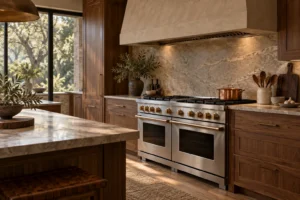
Ranges: Dual-Fuel and Gas Models by Width
Seven Monogram Statement ranges, dual-fuel and all-gas, in 30, 36 and 48 inch widths, with notes on igniters, ovens and the safe…

Specialized Monogram Appliance Repair in San Francisco
Mon–Sat: 8:00 AM – 7:00 PM
Burner, oven or control trouble on a slide-in Monogram range, sorted out by fuel type and model.
A Monogram range puts an oven, a set of burners or induction zones, and a control system into one slide-in body. When one part of that body misbehaves, the symptom often shows up somewhere else, which is why guessing at parts rarely works. We repair dual-fuel, all-gas and induction Monogram ranges in San Francisco and around the Bay Area, and every job starts with finding out which system is actually at fault.
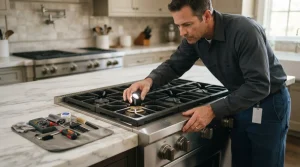
The spark igniter sits next to each burner. If one burner clicks but never catches, a technician looks at whether the igniter is wet, dirty or worn, whether the burner cap is seated, and whether gas is reaching that port. If every burner clicks after one has lit, the cause is often moisture or a spark module that keeps firing. The post on a gas range burner that keeps clicking walks through the pattern in detail.
On a dual-fuel range the oven is electric while the cooktop burns gas, so an oven failure and a burner failure are separate problems with separate parts. An oven that runs but never reaches the set point points toward a heating element, a temperature sensor or the control that switches the element. Uneven browning more often relates to airflow or a sensor reading, which the post on an oven that cooks unevenly explains.
A dead display with a working oven light, a control that beeps without responding, or a clock that resets after every power flicker each point to different places in the electronics. We note exactly what the panel does before touching anything, because the order of events narrows the search.
A loose oven door hinge, a cooling fan that whines, a convection fan that stops, or a door that does not seal all affect results without always stopping the range.
The prefix on the model label tells us where to look. A ZDP is a dual-fuel range, a ZGP is an all-gas range, and a ZHP is an induction range. On a dual-fuel model the oven draws power from the electrical supply and the burners from the gas line, so we confirm both supplies independently. On an all-gas range the oven burner and the igniter share the gas path, and an igniter that glows without opening the gas valve is a different fault than a gas supply problem. On induction, the cooking zones depend on the electronics and cooling airflow instead of flame.
The current catalog includes the 30-inch Monogram ZDP304NTSS repair page for dual-fuel, a 36-inch all-gas Monogram ZGP366NTSS repair page, and the 48-inch Monogram ZDP484NGTSS repair page. Each is a Statement series range, and each is listed as current.
Diagnosis comes before any repair. We begin with the history: when it started, whether it followed a power outage or a cleaning, and which burner or oven function is involved. Then we check the supplies, observe the failure as it happens, and trace it to a single cause when possible. The written estimate comes after that, and nothing is repaired until the owner approves it.
Some Monogram ranges show a message when something is wrong. Write down the exact text and any number or letter that appears, before you press anything. The post on what to record before resetting a Monogram error code explains why that note matters. You can also look up published meanings in the error codes section, which lists codes by appliance. We do not publish reset steps for ranges, because a reset can erase the very information a technician needs.
Many San Francisco kitchens are tight. A range in a Victorian flat may sit in a narrow alcove, and a hillside house may have a gas line routed a long way from the meter. Those details affect repair: access to the back of the range, the shut-off valve position, the anti-tip bracket and the flexible connector all matter. When we need to pull the range forward, we plan for floor protection and for the gas connection staying untouched until a qualified person can handle it safely.
The post about service access for built-in Monogram appliances covers what to clear before we arrive.
If you smell gas, leave the home straight away. Do not touch any switch, light a flame or use a phone inside. Call the gas utility or 911 from outside. Any smell of burning, any sparking, or a breaker that trips again as soon as you reset it means switching the range off at the breaker and leaving it off until it is inspected. Do not open panels, test wiring or bypass any switch yourself.
Monogram ranges look alike from the front, yet the fuel type, width and series change the parts. The label is usually found on the oven frame behind the door or on the edge of the control area. Read the full model number and send it with your request, or follow the steps in the post on finding the model number before service. A correct number lets us come prepared instead of discovering the fuel type on arrival.
You tell us the symptoms and the model number, and we confirm the visit. On arrival we look at the range in place, run the failing function, and explain what we found in plain terms. If a repair is needed, you receive a written estimate and decide whether to proceed. If it is not worth repairing, we say so, and the post on repair or replace for a Monogram appliance can help with the choice. Service covers San Francisco and the wider Bay Area, and you can see the neighborhoods listed under San Francisco locations.
For the full lineup, see our Monogram ranges guide. If your cooking surface is a separate unit, the Monogram rangetop repair and Monogram cooktop repair pages cover those. For an oven built into a wall, use the Monogram wall oven repair page. You can start a request on the contact page.
Yes. On a dual-fuel or all-gas range the oven and the cooktop are treated as separate systems, so we diagnose the side that fails and test the other side to see whether anything is shared.
Not necessarily. Moisture, a burner cap that is not seated, or a spark module that keeps firing can all cause clicking. A technician confirms which one before suggesting a part.
Leave the home without touching any switch, call the gas utility or 911 from outside, and do not return until you are told it is safe. Do not try to find the leak yourself.
No. We diagnose first, give you a written estimate, and repair nothing until you approve it.
It is usually on a label on the oven frame behind the door or near the control area. Read the whole number, including the letters at the end, because they identify finish and fuel type.
Seven Monogram Statement ranges, dual-fuel and all-gas, in 30, 36 and 48 inch widths, with notes on igniters, ovens and the safe…
Warm drinks, fogged glass, freezing cans and noise in Monogram beverage centers, checked against the seal, airflow and installation. Estimate before any…
Uneven cooling, constant running, drips and door faults on integrated Monogram columns, checked with the cabinetry and airflow in mind. Cabinet heat…
Cooling, frost, leaks and dispenser faults on Monogram French-door and wide built-ins, diagnosed before any part is replaced. We start with the…
Gas burners that misfire and induction zones that cut out or ignore touch, diagnosed at your San Francisco or Bay Area counter…
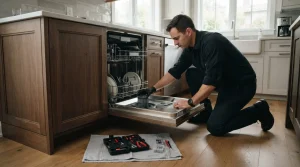
Drain, fill, latch and cycle faults on Monogram dishwashers, with each flashing-light message linked and a written estimate first. Estimate comes first.
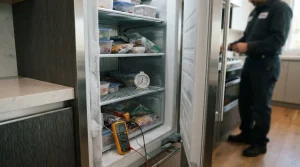
Frost, soft food, drawer faults and warm cabinets on Monogram built-in freezers, traced to the seal, airflow or defrost cycle before repair.…
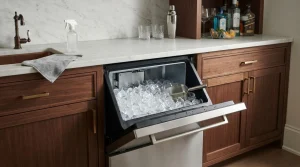
Low production, hollow cubes, leaks and blinking lights on Monogram ice makers, with linked code pages and a diagnosis before repair. Estimate…
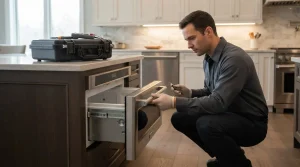
Built-in microwaves and Advantium speed ovens that stop heating, show SENSOR ERROR or stay locked, diagnosed in your San Francisco or Bay…
Hoods that are loud, weak, light-only or switching on alone, diagnosed in San Francisco and Bay Area kitchens with a written estimate…
Gas rangetop burners that will not light, click, or burn yellow, diagnosed in your San Francisco or Bay Area kitchen and repaired…
Built-in Monogram wall ovens and steam ovens that heat slowly, cook unevenly or show an F-code, diagnosed in your San Francisco or…
Temperature drift, vibration, fogged glass and display faults on Monogram wine reserves, diagnosed gently so your collection stays settled. Your bottles stay…
Share a few details and we’ll confirm an appointment. Prefer to talk? Call us and we’ll help right away.